IMIQ - Intelligent Mobility Space in the Quarter
Overview
"IMIQ - Intelligenter Mobilitätsraum im Quartier" ("Intelligent Mobility Space in the Quarter") is a project by the IMR, which is located at the Science Port in Magdeburg. During its scheduled duration (2024-2028), the Science Port becomes a district of the future, where new, user-focused solutions are conceived, technically tested, and socio-economically implemented.
More information can be found under The Project.
The project is funded by EFRE - European Regional Development Fund.
Involved parties:
- Prof. Dr. Andreas Wendemuth, Cognitive Systems
- Prof. Dr. Ellen Matthies,
Environmental Psychology
- Andreas Müller, Digitales Anwendungszentrum GALILEO Mobilität. Logistik. Industrie.
- Prof. Dr. Benjamin Noack, Autonomous Multisensor Systems
- Prof. Dr. Andreas Nürnberger, Data & Knowledge Engineering
- Prof. Dr. Hartmut Zadek, Logistics
- Dr. Leander Kauschke, Coordination
- Dr. Anja Köbrich, Supporting Research
News
→ Visit our LinkedIn page for more updates.
How can autonomous shuttles make public transport more flexible?
One of IMIQ's use cases focuses on operating autonomous shuttle buses and building a test route for highly automated shuttles (SAE Level 4).
The goal is to make public transport more user-oriented while improving the modal split through economically efficient and more flexible transport services.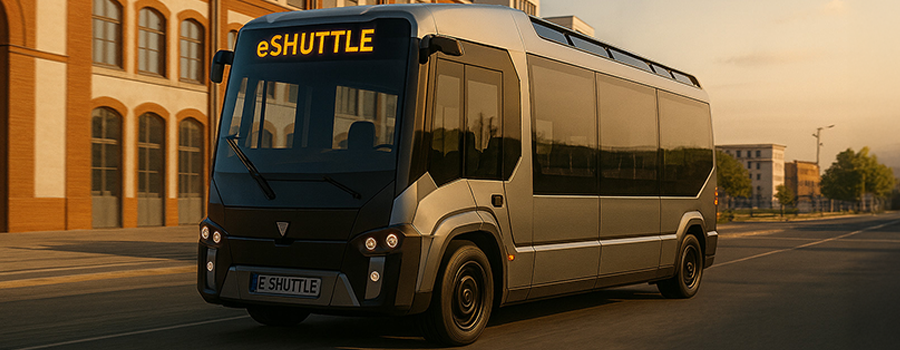
#MagdeburgsMobilityOfTomorrow #SmartMobility #Mobility #smartcity #Magdeburg
How can urban data be experienced beyond a screen?
One of IMIQ's use cases explores different tools for visualising and sonifying the data collected by the Digital Twin in the Science Port.
Researchers are testing technologies including VR glasses, smartphones and earphones to create mobile experiences, while the Elbedome enables an even more immersive environment.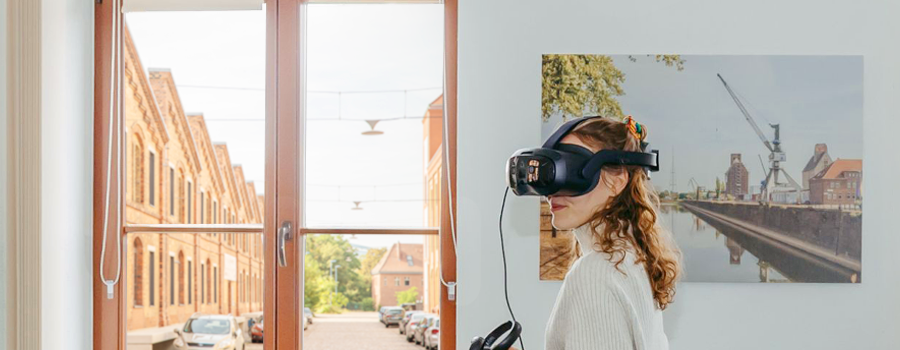
Hashtag#MagdeburgsMobilityOfTomorrow Hashtag#SmartMobility Hashtag#Mobility Hashtag#smartcity
One of IMIQ's use cases explores an AI Agent and Dialog Interface that enables communication using natural language.
The AI agent is designed to better understand user inputs, connect to real-time city sensor data and external data sources, and provide individual responses through intelligent reasoning.
The research also investigates automatic speech recognition (ASR) in noisy urban environments to improve interaction in everyday settings.
This use case is led by: Deniz Bilgin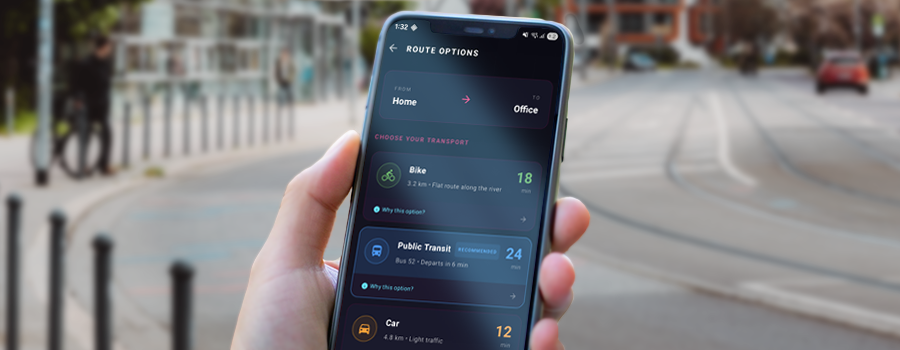
Hashtag#MagdeburgsMobilityOfTomorrow Hashtag#SmartMobility Hashtag#Mobility Hashtag#smartcity